
It takes into account the initial investment and the expected cash flows over the project’s lifespan, discounted to their present value. By comparing the NPV to zero, we can assess whether the investment is financially viable or not. First, let’s examine how incremental cash flow differs from net present value (NPV). Incremental cash flow is a measure of the increase in net cash flows resulting from investing in a new project, whereas NPV is a calculation of the present worth of all expected future cash inflows from that investment.
- It is the difference in working capital between two periods of time, typically the current period and the next period.
- Externalities are relevant for decision making, because they capture the full impact of the project on the company and the society.
- Current liabilities encompass all debts a company owes or will owe within the next 12 months.
- For example, a service company that doesn’t carry inventory will simply not factor inventory into its working capital calculation.
Net Working Capital calculations
In his book Investment Valuation, Tools and Techniques for Determining Value of Any Asset, Second Edition on page 261 accounting he defines working capital in the following manner. Below is a break down of subject weightings in the FMVA® financial analyst program. As you can see there is a heavy focus on financial modeling, finance, Excel, business valuation, budgeting/forecasting, PowerPoint presentations, accounting and business strategy.
- On the other hand, debt and interest-bearing securities (i.e. debt-like instruments) are sources of funds, alike financing activities, rather than an operating activity.
- Therefore, complete understanding of all tax effects, positive and negative, is crucial when projecting future cash flows.
- This debt will be considered when computing the cost of capital and it would be inappropriate to count it twice.
- For instance, the retail industry is cyclical in particular, where inventory cycles out much quicker around the holidays, but accumulates afterward (i.e. non-holiday periods).
- This metric is crucial for determining whether a proposed venture will enhance or detract from shareholder value.
- One well-known instance involves the pharmaceutical company Merck & Co. when they weighed their options on the development of a new drug, Singulair (Montgomery, 2014).
- By including all costs, income, assets and liability metrics, it provides a comprehensive view of how a specific project impacts the company’s cash flow.
What Makes a Good Financial Advisor? Key Traits to Look For
It is essential to remember that this is a simplified example, and real-world scenarios might involve more complexities due to unpredictable market conditions and a multitude of financial factors. As a general rule, the more current assets a company has on its balance sheet relative to its current liabilities, the lower its liquidity risk (and the better off it’ll be). The net working capital (NWC) metric is a measure of liquidity that helps determine whether a company can pay off its current liabilities with its current assets on hand. Grocery Store Accounting The positive incremental cash flow is a goods sign for the company to make a new investment, but it may not tell the whole story.
Evaluating Cash Outflows
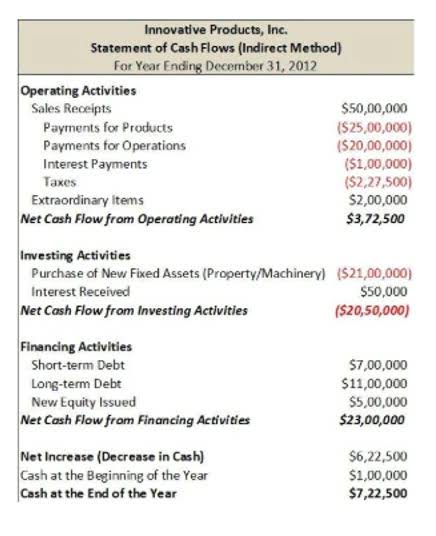
Instead of considering the inflow before taxes, focusing on figures post tax deductions provides a more accurate outlook on the cash flow situation of any company. Net cash Flow represents the difference between cash inflows and cash outflows over a specific period. Net Cash Flow takes into account both operating and financing activities, providing a comprehensive view of the project’s cash position. In order to help with incremental cash flow calculation, we have built Excel template to analyze the cash inflow and cash outflow for new investment on new machinery.

How to Calculate Incremental Working Capital

For example, a service company that doesn’t carry inventory will simply not factor inventory into its working capital calculation. Create subtotals for total non-cash current assets incremental net working capital and total non-debt current liabilities. Subtract the latter from the former to create a final total for net working capital. If the following will be valuable, create another line to calculate the increase or decrease of net working capital in the current period from the previous period.
- In other words, it is the rate of return that makes the present value of cash inflows equal to the present value of cash outflows.
- But since the working capital requirement (WCR) is expressed as a gross metric, the value must be standardized for the metric to be suitable to analyze the historical patterns and for comparative analysis to peer companies.
- Base on the projection, the company will be able to increase the sale of $ 1 million per year with 40% of variable cost.
- We will also back out all interest-bearing debt – short-term and the portion of the long-term debt that is due in the current period – from the current liabilities.
- This section has explained how to account for depreciation, taxes, and working capital in incremental cash flow analysis.
Suppose that a company is considering investing in a new machine that will cost $100,000 and will have a useful life of five years. The machine will generate annual revenues of $50,000 and annual operating costs of $20,000. The machine will be depreciated using the straight-line method over its useful life, which means that the annual depreciation expense will be $20,000. The machine will require an initial investment of $10,000 in working capital, which will be recovered at the end of the project’s life. Capital budgeting involves evaluating and selecting long-term investment projects that generate cash flows over an extended period.